
How a Rhinoplasty Training Program Improves Surgical Decision-Making?
How a Rhinoplasty Training Program Improves Surgical Decision-Making?
 Riams
Riams A successful rhinoplasty depends on clinical judgement as much as surgical technique. Every patient presents unique anatomical features, functional concerns, skin characteristics, and aesthetic goals. A comprehensive Rhinoplasty Training Program helps surgeons develop a systematic approach to evaluating these variables before entering the operating room.
Participants learn how to analyse facial proportions, assess nasal anatomy, understand patient expectations, and determine whether structural, preservation, or functional techniques are most appropriate. This emphasis on surgical thinking helps improve consistency and supports better long-term outcomes.
Key Takeaways
- A Rhinoplasty Training Program for Surgeons helps improve surgical decision-making, anatomical knowledge, and operative precision.
- Modern training covers cosmetic and functional rhinoplasty, preservation techniques, revision surgery, and complication management.
- Comprehensive programs focus on surgical planning, patient assessment, nasal anatomy, and long-term structural stability.
- In OT Assistance provides valuable exposure to live surgical workflows and real-time clinical decision-making.
- Advanced education enables surgeons to confidently perform evidence-based rhinoplasty procedures while maintaining functional and aesthetic outcomes.
Functional Rhinoplasty Assessment: Looking Beyond Cosmetic Improvement
Modern rhinoplasty focuses on maintaining or improving nasal function alongside aesthetic enhancement. A well-designed Rhinoplasty Training Program introduces surgeons to comprehensive functional assessment before surgery.
Training includes evaluation of the internal and external nasal valves, septal deviation, turbinate hypertrophy, airway obstruction, and breathing patterns. Understanding these factors enables surgeons to create treatment plans that support both appearance and nasal function while reducing postoperative complications.
Open vs Closed Rhinoplasty: Understanding the Right Surgical Approach
Choosing between open and closed rhinoplasty requires careful evaluation rather than following a single preferred technique. During advanced rhinoplasty education, surgeons learn the indications, advantages, and limitations of each approach.
Training emphasises selecting the most appropriate technique based on nasal anatomy, complexity of deformity, revision requirements, skin thickness, and surgical objectives. Developing this decision-making process helps surgeons adapt their approach to individual patient needs.
Preservation Rhinoplasty Techniques in Modern Surgical Practice.
Preservation rhinoplasty has become an important component of contemporary nasal surgery. Rather than removing significant portions of the nasal dorsum, preservation techniques focus on maintaining native anatomical structures whenever appropriate.
A comprehensive Rhinoplasty Training Program introduces surgeons to dorsal preservation principles, including patient selection, biomechanical considerations, dorsal lowering methods, and long-term structural stability. Understanding when preservation techniques are indicated allows surgeons to expand their surgical options.
Surgical Planning Before Rhinoplasty.
Thorough pre-operative planning forms the foundation of predictable rhinoplasty outcomes. Advanced training teaches surgeons how to evaluate facial balance, nasal proportions, skin quality, cartilage support, and patient expectations before creating an operative strategy.
Planning also includes photographic analysis, anatomical mapping, identification of potential surgical challenges, and preparation for intraoperative decision-making. These skills contribute to greater precision throughout the procedure.
Mastering Nasal Anatomy Through Structured Training.
A detailed understanding of nasal anatomy is essential for safe rhinoplasty. A Rhinoplasty Training Program provides in-depth education on the nasal bones, septum, upper and lower lateral cartilages, ligaments, soft tissue envelope, vascular supply, and structural support mechanisms.
Strengthening anatomical knowledge allows surgeons to perform more precise dissections, preserve critical support structures, and minimise unnecessary tissue trauma.
Learning Advanced Tip Surgery Techniques.
The nasal tip is one of the most technically demanding aspects of rhinoplasty. Surgeons benefit from learning how projection, rotation, symmetry, and support influence both appearance and long-term stability.
Training often includes cartilage preservation, suture techniques, tip support mechanisms, and methods for managing thick or thin skin, enabling surgeons to achieve balanced and natural-looking results.
Osteotomy Techniques for Improved Nasal Contouring.
Osteotomies play a significant role in correcting nasal width, asymmetry, and post-traumatic deformities. During advanced training, surgeons become familiar with various osteotomy techniques, including medial, lateral, intermediate, and piezo-assisted approaches.
Understanding proper indications and execution helps improve surgical precision while reducing the likelihood of unwanted fractures or postoperative irregularities.
Septoplasty Integration Within Rhinoplasty.
Many rhinoplasty patients require simultaneous correction of septal deformities. A comprehensive Rhinoplasty Training Program demonstrates how septoplasty can be integrated into cosmetic nasal surgery while maintaining structural stability.
Training covers cartilage harvesting, septal reconstruction, caudal septal correction, and techniques that improve both nasal airflow and external appearance.
Graft Selection and Structural Support.
Cartilage grafting remains an important aspect of advanced rhinoplasty. Surgeons learn how different grafts contribute to structural reinforcement, contour refinement, and functional support.
Educational programs commonly include spreader grafts, columellar struts, shield grafts, alar batten grafts, septal cartilage, auricular cartilage, and costal cartilage, helping surgeons understand the indications for each option.
Managing Primary and Revision Rhinoplasty Cases.
Revision rhinoplasty often presents greater technical complexity due to altered anatomy, scar tissue, and limited cartilage availability. Advanced training prepares surgeons to assess previous surgical changes, identify underlying problems, and develop appropriate revision strategies.
Exposure to revision cases enhances problem-solving skills and reinforces the importance of careful planning in primary rhinoplasty.
Preventing and Managing Rhinoplasty Complications.
Recognising potential complications is an important component of surgical education. A Rhinoplasty Training Program discusses strategies for preventing and managing issues such as dorsal irregularities, pollybeak deformity, saddle nose, nasal valve compromise, asymmetry, and postoperative healing concerns.
Understanding complication management helps surgeons refine their techniques and improve patient safety.
Case-Based Learning Enhances Clinical Confidence.
Real surgical cases provide valuable opportunities to connect theoretical knowledge with clinical practice. Structured case discussions expose surgeons to a wide range of anatomical variations, challenging deformities, revision procedures, traumatic injuries, and preservation rhinoplasty cases.
Analysing real patient scenarios strengthens surgical judgement and encourages evidence-based decision-making.
In OT Assistance and Live Surgical Observation.
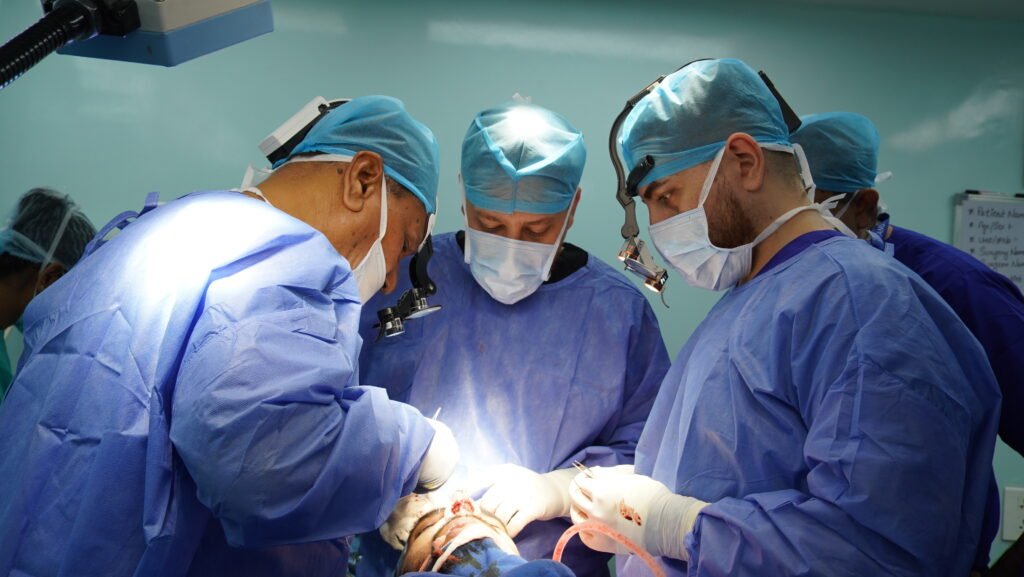
Observation during live surgery allows participants to understand how experienced rhinoplasty surgeons adapt to changing intraoperative findings. In OT Assistance provides practical exposure to surgical workflow, instrumentation, tissue handling, and operative sequencing.
This experience helps bridge the gap between theoretical learning and real-world surgical practice while improving procedural confidence.
Long-Term Stability in Rhinoplasty.
Achieving a successful rhinoplasty extends beyond immediate postoperative appearance. Long-term stability depends on preserving structural support, respecting nasal biomechanics, selecting appropriate grafting techniques, and planning each procedure carefully.
A high-quality Rhinoplasty Training Program encourages surgeons to focus on durable functional and aesthetic outcomes through evidence-based surgical principles.
Conclusion
Choosing the right Rhinoplasty Training Program for Surgeons is an important step towards advancing surgical expertise and delivering consistent patient outcomes. A comprehensive program should combine detailed anatomical education, surgical planning, functional assessment, preservation techniques, revision rhinoplasty, complication management, and valuable In OT Assistance. Continuous learning through structured, evidence-based training helps surgeons strengthen clinical decision-making, refine operative skills, and confidently perform modern rhinoplasty procedures while maintaining both functional integrity and natural aesthetic results.
FAQ
What skills should surgeons develop during a Rhinoplasty Training Program?
Surgeons should strengthen their understanding of nasal anatomy, patient assessment, surgical planning, preservation techniques, graft selection, complication management, and long-term structural preservation.
Does a Rhinoplasty Training Program include functional rhinoplasty?
Many advanced training programs include evaluation of nasal airway function, septoplasty, nasal valve assessment, and techniques that help maintain or improve breathing while achieving aesthetic goals.
How can I find a Rhinoplasty Training Program for Surgeons near me?
When searching for a Rhinoplasty Training Program for Surgeons near me, compare the curriculum, faculty expertise, surgical exposure, and In OT Assistance opportunities to choose a program that supports your long-term professional development.
Why is preservation rhinoplasty becoming increasingly popular?
Preservation rhinoplasty focuses on maintaining native anatomical structures whenever appropriate, helping preserve dorsal aesthetics and structural integrity in selected patients.
Why is revision rhinoplasty more challenging than primary rhinoplasty?
Revision procedures often involve scar tissue, altered anatomy, previous cartilage removal, and structural deficiencies, making careful planning and advanced surgical judgement essential.
How does case-based learning benefit rhinoplasty surgeons?
Case discussions expose surgeons to diverse anatomical presentations and surgical challenges, helping improve clinical reasoning, operative planning, and decision-making in complex cases.