
Fellowship in Aesthetic Medicine: Training, Certification, and Career Growth
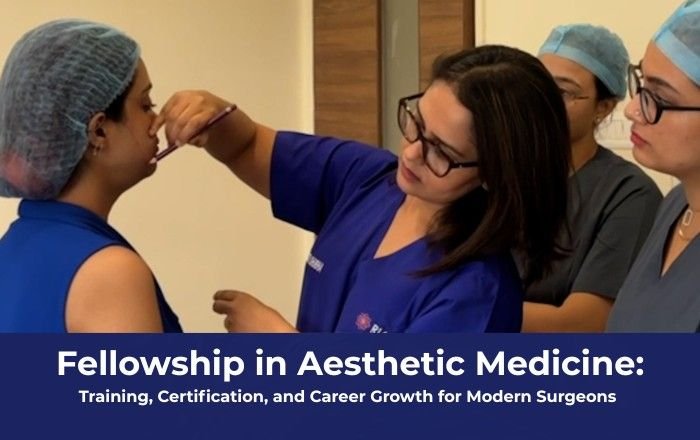
Fellowship in Aesthetic Medicine: Training, Certification, and Career Growth
 Riams
Riams The demand for minimally invasive aesthetic procedures has increased dramatically worldwide. Patients today increasingly seek non-surgical solutions for facial rejuvenation, contour enhancement, and age management. Consequently, physicians and surgeons are expanding their expertise through specialized education programs such as a Fellowship in Aesthetic Medicine.
An Aesthetic Medicine Fellowship equips qualified doctors with advanced knowledge, procedural expertise, patient assessment skills, and clinical decision-making capabilities necessary for modern aesthetic practice.
For otorhinolaryngologists (MS, DNB, DLO), plastic surgeons (MCh, DNB), facial plastic surgeons, and other medical professionals, pursuing an Aesthetic Medicine Course can significantly enhance career opportunities while complementing existing surgical skills.
This article explains the scope, curriculum, certification, and career prospects associated with Aesthetic Medicine Training.
Key Takeaways
- A Fellowship in Aesthetic Medicine provides structured education in non-surgical facial aesthetics.
- Doctors learn injectables, energy-based devices, skin rejuvenation, and patient assessment.
- Certification improves professional credibility and practice diversification.
- In OT Assistance and supervised clinical exposure remain essential components of quality training.
- Aesthetic Medicine differs from Cosmetic Surgery primarily in invasiveness and treatment approach.
- Career opportunities include private practice, aesthetic clinics, hospitals, academia, and entrepreneurship.
What Is a Fellowship in Aesthetic Medicine?
A Fellowship in Aesthetic Medicine is an advanced professional training program designed for licensed medical practitioners seeking expertise in non-surgical aesthetic procedures.
What Does an Aesthetic Medicine Course Include?
Most comprehensive programs cover:
- Facial anatomy and aging science
- Patient selection and consultation
- Safety protocols and complication management
- Injectable therapies
- Laser and energy-based technologies
- Combination treatment planning
- Ethical and legal considerations
The primary objective is to develop evidence-based aesthetic practice while maintaining patient safety.
Who Should Join an Aesthetic Medicine Fellowship?
The ideal candidates include:
Otorhinolaryngologists (ENT Surgeons)
ENT surgeons possess extensive knowledge of facial anatomy, making aesthetic medicine a natural extension of their clinical expertise.
Plastic Surgeons
Plastic surgeons can integrate minimally invasive procedures with surgical facial rejuvenation strategies.
Other Eligible Physicians
Depending on regional regulations, programs may admit:
- Dermatologists
- Maxillofacial surgeons
- Ophthalmologists
- General practitioners with aesthetic interests
- Facial plastic surgeons
What Procedures Are Taught During Aesthetic Medicine Training?
A high-quality Aesthetic Medicine Training curriculum generally includes the following procedural categories.
Injectable Treatments
- Botulinum toxin therapy
- Dermal fillers
- Biostimulators
- Skin boosters
- Platelet-rich plasma (PRP)
Facial Rejuvenation Procedures
- Chemical peels
- Microneedling
- Scar management
- Skin resurfacing
Energy-Based Technologies
- Laser treatments
- Radiofrequency procedures
- Ultrasound-based rejuvenation
- IPL therapies
Facial Assessment and Treatment Planning
Doctors learn:
- Dynamic facial analysis
- Facial proportions
- Aging patterns
- Ethnic and gender considerations
- Combination therapy strategies
Complication Prevention and Management
An effective fellowship prioritizes:
- Patient safety
- Vascular occlusion recognition
- Emergency protocols
- Infection prevention
- Adverse event management
How Can Doctors Benefit from Facial Aesthetics Training?
Clinical Benefits
Facial aesthetics training helps physicians:
- Improve facial analysis capabilities.
- Enhance patient communication.
- Expand procedural competencies.
- Deliver comprehensive treatment plans.
Practice Benefits
Benefits include:
| Advantage | Clinical Impact |
|---|---|
| Service diversification | Additional treatment offerings |
| Increased patient retention | Continuity of care |
| Expanded referral network | Improved practice growth |
| Professional differentiation | Enhanced market positioning |
What Is the Difference Between Cosmetic Medicine and Aesthetic Medicine?
| Feature | Aesthetic Medicine | Cosmetic Medicine |
| Scope | Primarily non-surgical procedures | Includes surgical and non-surgical procedures |
| Procedures | Fillers, toxins, lasers | Broader cosmetic interventions |
| Invasiveness | Minimally invasive | May involve surgery |
| Recovery | Minimal downtime | Variable recovery periods |
Although these terms are often used interchangeably, aesthetic medicine primarily focuses on minimally invasive treatments designed to improve appearance and patient satisfaction.
Why Is In OT Assistance Important in Aesthetic Training?
Direct clinical exposure remains essential for developing procedural confidence and patient safety awareness.
Benefits of In OT Assistance
- Observation of expert procedural techniques
- Understanding patient selection principles
- Recognition of anatomical variations
- Real-time complication management exposure
- Development of procedural workflow understanding
Programs incorporating extensive supervised clinical exposure generally produce more competent practitioners.
What Should Doctors Look for Before Enrolling in an Aesthetic Medicine Course?
Choosing the right fellowship is crucial.
Essential Selection Criteria
Faculty Expertise
Look for internationally recognized faculty with established clinical experience.
Structured Curriculum
The syllabus should cover:
- Anatomy
- Injectables
- Lasers
- Complications
- Ethics
- Practice management
Certification
Verify whether the program provides recognized Aesthetic Medicine Certification and continuing medical education credits.
Clinical Exposure
Assess:
- Case volume
- Patient diversity
- In OT Assistance opportunities
- Supervised procedural exposure
Safety Standards
The institute should emphasize evidence-based medicine and complication management.
Statistics and Data
Recent global trends indicate substantial growth in aesthetic medicine.
- The global aesthetic medicine market is projected to exceed USD 150 billion during the next decade.
- Non-surgical procedures continue to outpace surgical interventions in annual growth.
- Injectable procedures represent one of the fastest-growing segments in facial aesthetics.
- Demand for minimally invasive treatments continues to increase among both male and female patients.
These trends highlight the growing importance of specialized physician training.
Expert Insights
“A comprehensive understanding of facial anatomy and patient safety is fundamental for successful aesthetic outcomes.”
— Senior Facial Plastic Surgery Educator
“Structured fellowship programs help physicians transition from procedural learners to safe and ethical aesthetic practitioners.”
— International Aesthetic Medicine Faculty Member
Real Examples and Case Studies
Case Example 1
An ENT surgeon integrated facial injectables into an existing rhinology practice, enabling comprehensive facial rejuvenation consultations and increasing patient retention.
Case Example 2
A plastic surgeon added non-surgical facial treatments alongside surgical procedures, creating a continuum of aesthetic care for patients seeking less invasive options.
Case Example 3
A young physician completed an Aesthetic Medicine Fellowship and established a dedicated facial aesthetics clinic, expanding professional opportunities beyond traditional clinical practice.
Career Opportunities After Completing an Aesthetic Medicine Course
Graduates may pursue careers in:
Private Practice
Offer minimally invasive aesthetic procedures independently.
Multispecialty Hospitals
Develop hospital-based aesthetic departments.
Dedicated Aesthetic Clinics
Join established cosmetic centers.
Academic and Training Roles
Participate in:
- Teaching programs
- Workshops
- Research initiatives
Entrepreneurship
Establish:
- Medi-spas
- Facial aesthetic centers
- Specialty cosmetic practices
Future Trends in Aesthetic Medicine
Emerging areas include:
- Regenerative aesthetics
- Personalized treatment planning
- Artificial intelligence-assisted assessment
- Combination therapies
- Preventive aesthetics
- Ultrasound-guided injectables
Continuous education will remain essential for long-term success.
Conclusion
A Fellowship in Aesthetic Medicine offers physicians an opportunity to expand clinical capabilities, diversify practice, and meet the growing global demand for minimally invasive aesthetic treatments.
For ENT surgeons, plastic surgeons, and facial aesthetic specialists, structured Aesthetic Medicine Training supported by expert mentorship, comprehensive curriculum, and In OT Assistance can significantly enhance professional growth and patient outcomes.
As aesthetic medicine continues to evolve, continuous education and evidence-based practice will remain the foundation of safe and successful aesthetic careers.
Frequently Asked Questions
What is a Fellowship in Aesthetic Medicine?
A Fellowship in Aesthetic Medicine is an advanced training program that teaches doctors minimally invasive aesthetic procedures, facial assessment, and patient safety principles.
Who can join an Aesthetic Medicine Course?
Eligible candidates typically include ENT surgeons, plastic surgeons, dermatologists, facial plastic surgeons, and other licensed physicians, depending on local regulations.
How long does an Aesthetic Medicine Fellowship take?
Programs may range from a few months to one year depending on curriculum structure and clinical exposure.
Is Aesthetic Medicine Certification important?
Yes. Certification improves credibility, demonstrates competency, and supports professional development.
Does aesthetic medicine require prior surgical experience?
Although surgical experience is beneficial, many fellowship programs accept physicians from various specialties.
What career options are available after certification?
Graduates may work in aesthetic clinics, hospitals, private practices, academic institutions, or establish independent aesthetic centers.