Fellowship in Aesthetic Medicine: The Next Step for Surgeons
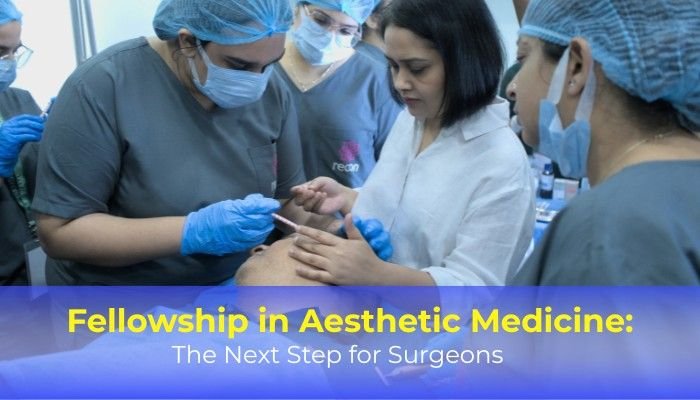
Fellowship in Aesthetic Medicine: The Next Step for Surgeons
 Riams
Riams The global demand for aesthetic medicine continues to grow as patients increasingly seek minimally invasive and non-surgical treatment options. For ENT surgeons, facial plastic surgeons, plastic surgeons, and other medical professionals, a Fellowship in Aesthetic Medicine offers an opportunity to expand clinical expertise while staying aligned with evolving patient expectations.
Unlike short workshops, a structured fellowship provides comprehensive education in facial aesthetics, cosmetic medicine, patient assessment, treatment planning, and advanced aesthetic procedures. It serves as a bridge between surgical knowledge and modern aesthetic practice.
Key Takeaways
- A Fellowship in Aesthetic Medicine provides advanced education in aesthetic procedures.
- Surgeons gain expertise in facial rejuvenation and aesthetic consultation.
- Programs often include injectables, facial assessment, and non-surgical treatments.
- In OT Assistance helps doctors understand real-world clinical workflows.
- Aesthetic medicine complements existing surgical specialties.
- Fellowship graduates can expand their professional opportunities globally.
What Is a Fellowship in Aesthetic Medicine?
A Fellowship in Aesthetic Medicine is an advanced educational program designed for qualified medical professionals seeking specialized knowledge in facial aesthetics and cosmetic procedures.
The curriculum typically combines theoretical learning, patient assessment, aesthetic consultation techniques, procedural planning, and supervised clinical exposure.
Core Areas Covered
- Facial anatomy for aesthetic practice
- Skin rejuvenation concepts
- Injectable treatments
- Facial contouring principles
- Patient selection and consultation
- Treatment planning
- Safety and complication management
- Ethical aesthetic practice
Who Should Join an Aesthetic Medicine Fellowship?
The program is particularly beneficial for:
ENT Surgeons
Otorhinolaryngologists frequently manage facial structures and can enhance their understanding of aesthetic facial balance and rejuvenation.
Plastic Surgeons
Plastic surgeons can complement reconstructive and cosmetic procedures with modern aesthetic medicine techniques.
Facial Plastic Surgeons
Aesthetic medicine training supports comprehensive facial treatment planning and patient care.
Medical Professionals Interested in Aesthetics
Doctors seeking to develop expertise in non-surgical aesthetic procedures may also benefit from structured fellowship programs.
What Procedures Are Taught in an Fellowship in Aesthetic Medicine Training Course?
Although curricula vary, many programs include education in:
Facial Rejuvenation
- Skin quality assessment
- Aging face analysis
- Facial harmony principles
Injectable Procedures
An Injectables Training Course component may include:
- Botulinum toxin concepts
- Dermal filler principles
- Facial volumization planning
- Safety protocols
Non-Surgical Aesthetic Treatments
A Non-Surgical Fellowship in Aesthetic Course may cover:
- Facial contouring concepts
- Combination treatment planning
- Comprehensive aesthetic evaluation
- Patient follow-up strategies
Cosmetic Medicine vs Aesthetic Medicine: Understanding the Difference
| Cosmetic Medicine | Aesthetic Medicine |
|---|---|
| Focuses on appearance enhancement | Focuses on overall aesthetic improvement and patient satisfaction |
| Procedure-oriented | Comprehensive patient-centered approach |
| Often treatment specific | Includes assessment, planning, and long-term care |
| Cosmetic outcomes emphasized | Facial harmony and natural results emphasized |
In practice, the two disciplines overlap significantly and are often integrated within modern aesthetic clinics.
Why In OT Assistance Matters?
One of the most valuable components of advanced training programs is In OT Assistance.
Through supervised clinical observation and procedural exposure, participants gain insight into:
- Patient workflow
- Treatment planning
- Clinical decision-making
- Safety protocols
- Complication prevention strategies
This learning environment helps bridge theoretical concepts with practical application while maintaining patient safety and professional standards.
Benefits of Facial Aesthetics Training for Surgeons.
Enhanced Clinical Skills
Surgeons develop a deeper understanding of facial proportions, aging patterns, and aesthetic analysis.
Improved Patient Consultation
Training strengthens communication skills and treatment planning abilities.
Broader Treatment Perspective
Doctors learn to combine surgical and non-surgical approaches when appropriate.
Statistics and Data
Several global healthcare reports indicate continued growth in minimally invasive aesthetic procedures worldwide.
Key trends include:
- Increasing demand for facial rejuvenation treatments.
- Growth in non-surgical aesthetic procedures.
- Rising patient preference for treatments with minimal downtime.
- Greater acceptance of preventive aesthetic care among younger adults.
These trends highlight the importance of advanced education for medical professionals entering the field.
Expert Insights
Leading aesthetic educators consistently emphasize three pillars of successful aesthetic practice:
- Strong anatomical knowledge.
- Patient-centered treatment planning.
- Continuous professional education.
A fellowship program helps surgeons strengthen all three areas through structured learning and clinical exposure.
Real Example
Consider an ENT surgeon already experienced in facial anatomy and rhinology.
After completing a Fellowship in Aesthetic Medicine, the surgeon may gain additional expertise in facial assessment, rejuvenation planning, and injectable treatments. This expanded skill set can support a more comprehensive approach to facial aesthetics while enhancing patient care pathways.
How to Choose the Right Fellowship?
Before enrolling, evaluate the following:
Faculty Expertise
Look for experienced educators and recognized aesthetic practitioners.
Curriculum Depth
The program should cover both foundational and advanced concepts.
Clinical Exposure
Programs offering In OT Assistance provide valuable learning opportunities.
Patient Safety Focus
Safety protocols and complication management should be integrated throughout the curriculum.
Certification and Recognition
Choose programs with established educational standards and professional credibility.
Career Opportunities After a Fellowship in Aesthetic Medicine.
Graduates may pursue opportunities in:
- Facial aesthetic practice
- Cosmetic medicine clinics
- Multidisciplinary aesthetic centers
- Private practice enhancement
- Continuing professional education pathways
- Advanced aesthetic medicine training programs
Conclusion
A Fellowship in Aesthetic Medicine represents an important educational pathway for surgeons and physicians seeking to expand their expertise in modern aesthetic care. By combining scientific knowledge, facial aesthetics education, patient assessment skills, and In OT Assistance, these programs help professionals develop a comprehensive understanding of contemporary aesthetic medicine.
Frequently Asked Questions
What is a Fellowship in Aesthetic Medicine?
It is an advanced educational program that helps qualified doctors develop expertise in facial aesthetics, cosmetic medicine, and non-surgical procedures.
Who should join an Aesthetic Medicine Training Course?
ENT surgeons, plastic surgeons, facial plastic surgeons, and physicians interested in aesthetic medicine can benefit from structured training.
What is included in Facial Aesthetics Training?
Programs commonly cover facial anatomy, injectables, patient assessment, treatment planning, and facial rejuvenation concepts.
Why is In OT Assistance important?
It allows participants to observe clinical workflows, procedural planning, and patient management in a supervised educational environment.
What career options are available after completing the fellowship?
Doctors may expand their aesthetic practice, pursue advanced education, or integrate aesthetic medicine into existing specialties.