
Aesthetic Medicine Course for Doctors: Complete Career Guide
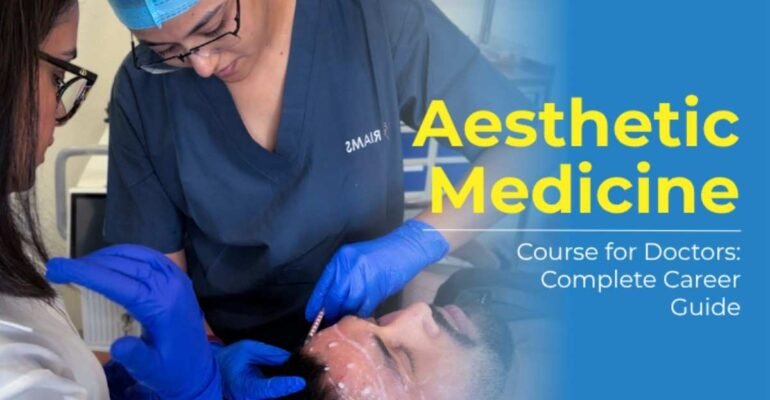
Aesthetic Medicine Course for Doctors: Complete Career Guide
 Riams
Riams The global demand for non-surgical aesthetic treatments has grown significantly over the past decade. Patients today seek minimally invasive procedures that deliver natural-looking results with minimal downtime. As a result, doctors across specialties—including ENT surgeons, plastic surgeons, maxillofacial surgeons, dermatologists, and general practitioners—are expanding their expertise through an Aesthetic Medicine Course.
An Aesthetic Medicine Course equips medical professionals with the knowledge, clinical judgment, and procedural skills required to perform modern aesthetic treatments safely and effectively. From facial rejuvenation and injectables to skin enhancement and anti-aging therapies, structured training helps doctors integrate aesthetic procedures into their practice while maintaining high clinical standards.
This guide explains what an Aesthetic Medicine Course includes, who should enroll, career opportunities, and how to choose the right training program.
Ready to advance your expertise in facial aesthetics?
Key Takeaways
- An Aesthetic Medicine Course focuses on non-surgical cosmetic procedures.
- Ideal for ENT surgeons, plastic surgeons, facial plastic surgeons, and physicians.
- Training includes botulinum toxin, dermal fillers, facial rejuvenation, skin therapies, and patient assessment.
- A quality Aesthetic Medicine Training Course emphasizes patient safety and evidence-based protocols.
- Injectables Training Courses help doctors develop precision and confidence in aesthetic procedures.
- Career opportunities include aesthetic clinics, private practice expansion, and medical entrepreneurship.
- Global demand for aesthetic medicine continues to grow year after year.
What Is an Aesthetic Medicine Course?
An Aesthetic Medicine Course is a structured educational program designed to train doctors in non-surgical cosmetic procedures and facial rejuvenation techniques.
The curriculum typically combines:
- Facial anatomy
- Patient consultation
- Aesthetic assessment
- Injectable treatments
- Skin rejuvenation therapies
- Complication management
- Practice development strategies
The goal is to help physicians safely integrate aesthetic procedures into their clinical practice while maintaining evidence-based medical standards.
Core Areas Covered
| Training Area | Focus |
|---|---|
| Facial Anatomy | Aging process and facial proportions |
| Injectables | Neuromodulators and dermal fillers |
| Skin Rejuvenation | Chemical peels and regenerative treatments |
| Patient Assessment | Treatment planning and consultation |
| Safety Protocols | Complication prevention and management |
| Practice Building | Patient communication and ethics |
Cosmetic Medicine vs Aesthetic Medicine: What’s the Difference?
Many professionals use the terms interchangeably, but there are subtle distinctions.
Cosmetic Medicine
Cosmetic medicine generally focuses on improving appearance through both surgical and non-surgical interventions.
Aesthetic Medicine
Aesthetic medicine primarily emphasizes minimally invasive and non-surgical procedures designed to enhance appearance while preserving natural anatomy.
| Cosmetic Medicine | Aesthetic Medicine |
| Surgical and non-surgical treatments | Primarily non-surgical treatments |
| Broader cosmetic scope | Focused facial rejuvenation |
| Includes operative procedures | Minimally invasive techniques |
| Often multidisciplinary | Strong emphasis on injectables and skin therapies |
What Procedures Are Taught in an Aesthetic Medicine Training Course?
The curriculum varies by institution but typically includes comprehensive facial rejuvenation techniques.
Injectable Treatments
Injectables remain among the most requested aesthetic procedures globally.
Training commonly includes:
- Neuromodulator injections
- Dermal fillers
- Facial contouring
- Lip enhancement
- Mid-face volumization
- Jawline definition
Facial Rejuvenation Procedures
Doctors learn how to address:
- Fine lines
- Wrinkles
- Volume loss
- Skin texture concerns
- Early aging signs
Skin Treatments
Programs may include:
- Chemical peels
- Skin resurfacing concepts
- Regenerative aesthetics
- Combination treatment planning
Patient Consultation and Planning
Successful outcomes begin with proper evaluation.
Training focuses on:
- Facial analysis
- Patient expectations
- Ethical treatment recommendations
- Documentation protocols
Why Facial Aesthetics Training Matters?
Facial aesthetics requires an understanding of anatomy, balance, symmetry, and aging patterns.
A dedicated Facial Aesthetics Training program helps doctors:
- Improve facial assessment skills
- Understand aesthetic proportions
- Develop treatment planning expertise
- Enhance patient communication
- Deliver natural-looking outcomes
For ENT surgeons and facial plastic surgeons, this knowledge complements existing expertise in facial anatomy and reconstructive procedures.
Why Is Injectables Training Important?
Injectable procedures continue to dominate the global aesthetic market.
According to international aesthetic industry reports, millions of injectable procedures are performed annually worldwide, making them among the most popular cosmetic treatments.
Benefits of Structured Injectables Training
- Improved procedural confidence
- Better understanding of facial anatomy
- Enhanced patient safety
- Recognition of complications
- Evidence-based treatment planning
Programs that include In OT Assistance allow participants to observe clinical workflows, patient selection, treatment planning, and procedural techniques within a real-world environment.
How Does a Non-Surgical Aesthetic Course Improve Clinical Skills?
A Non-Surgical Aesthetic Course strengthens both technical and patient-management abilities.
Clinical Benefits
Doctors learn:
- Advanced facial assessment
- Treatment customization
- Risk evaluation
- Complication management
- Follow-up care
Professional Benefits
Training helps practitioners:
- Expand service offerings
- Increase patient retention
- Build referral networks
- Improve practice competitiveness
- Enhance professional credibility
Statistics and Industry Growth
Several market studies indicate strong growth within the global aesthetic medicine sector.
Key trends include:
- Rising demand for minimally invasive treatments
- Increased patient preference for shorter recovery periods
- Growing acceptance of preventive aesthetic treatments
- Expanding male aesthetic patient population
- Continued growth in facial injectables and regenerative aesthetics
These trends suggest ongoing opportunities for trained aesthetic physicians worldwide.
Expert Insights
Many experienced aesthetic practitioners emphasize that successful outcomes depend on more than technical skills.
Important factors include:
- Comprehensive facial assessment
- Conservative treatment planning
- Ethical patient selection
- Continuous professional education
- Evidence-based clinical practice
Doctors who combine medical expertise with aesthetic judgment often achieve the highest levels of patient satisfaction.
Real-World Example
Case Example: ENT Surgeon Expanding into Facial Aesthetics
An ENT surgeon with experience in rhinoplasty wanted to offer non-surgical facial rejuvenation services.
After completing an Aesthetic Medicine Course, the surgeon incorporated:
- Facial consultations
- Injectable treatments
- Comprehensive facial harmony assessments
This expanded service portfolio allowed the practice to provide both surgical and non-surgical solutions, improving patient retention and treatment continuity.
Career Opportunities After Completing an Aesthetic Medicine Course.
The aesthetic medicine field offers multiple career pathways.
Private Practice
Doctors can integrate aesthetic procedures into existing clinics.
Dedicated Aesthetic Clinics
Many physicians choose to focus primarily on cosmetic treatments.
Multidisciplinary Centers
Hospitals and specialty centers increasingly include aesthetic services.
Medical Education
Experienced practitioners may eventually participate in training and mentoring future aesthetic physicians.
International Opportunities
The growing global demand for aesthetic treatments creates opportunities across multiple healthcare markets.
How to Choose the Right Aesthetic Medicine Course?
Before enrolling, doctors should evaluate several factors.
Faculty Expertise
Choose programs led by experienced aesthetic physicians and surgeons.
Curriculum Depth
Ensure the course covers:
- Facial anatomy
- Injectables
- Patient assessment
- Complication management
Clinical Exposure
Look for programs that include In OT Assistance and real clinical observation.
Accreditation
Select recognized institutions with established educational standards.
Continuing Support
Programs offering mentorship and ongoing education provide long-term value.
Conclusion
An Aesthetic Medicine Course offers doctors a structured pathway into one of healthcare’s fastest-growing specialties. By combining facial anatomy, injectables education, patient assessment, and aesthetic consultation skills, physicians can expand their clinical expertise and meet increasing patient demand for minimally invasive cosmetic treatments.
For ENT surgeons, plastic surgeons, and other medical professionals, aesthetic medicine training represents an opportunity to enhance patient care, diversify services, and build a future-ready practice in a rapidly evolving field.
Frequently Asked Questions
What is an Aesthetic Medicine Course?
An Aesthetic Medicine Course trains doctors in non-surgical cosmetic procedures, facial rejuvenation techniques, patient assessment, and aesthetic practice development.
Who can join an Aesthetic Medicine Training Course?
Eligible participants often include ENT surgeons, plastic surgeons, dermatologists, general physicians, maxillofacial surgeons, and other qualified medical professionals.
What procedures are taught?
Most courses teach injectables, facial rejuvenation, skin treatments, consultation skills, and complication management.
Is injectables training important?
Yes. Injectable treatments are among the most commonly requested aesthetic procedures and require thorough anatomical knowledge and procedural training.
Can ENT surgeons benefit from aesthetic medicine training?
Absolutely. Facial aesthetics complements rhinoplasty, facial plastic surgery, and other facial procedures commonly performed by ENT specialists.
What career opportunities exist after training?
Graduates may work in aesthetic clinics, private practices, multidisciplinary centers, medical education, or specialized cosmetic medicine settings.