
What Is an Aesthetic Medicine Course and Who Should Join It?
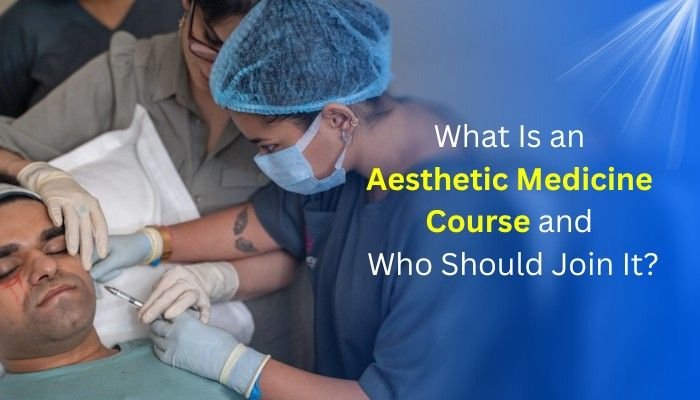
What Is an Aesthetic Medicine Course and Who Should Join It?
 Riams
Riams The global demand for aesthetic medicine continues to grow as more patients seek minimally invasive facial rejuvenation and cosmetic procedures. As a result, many surgeons and doctors are exploring advanced education through a Fellowship in Aesthetic Medicine.
But what exactly is a Fellowship in Aesthetic Medicine? Who should join it? What procedures are taught? And how can it benefit an ENT surgeon, plastic surgeon, or facial aesthetic practitioner?
This comprehensive guide answers the most common questions doctors ask before enrolling.
What Is a Fellowship in Aesthetic Medicine?
A Fellowship in Aesthetic Medicine is an advanced medical training program designed for qualified doctors and surgeons who want to develop expertise in non-surgical facial aesthetics, cosmetic medicine, facial rejuvenation, injectables, patient assessment, and aesthetic treatment planning.
These programs combine theoretical knowledge, clinical exposure, and In OT Assistance to help practitioners understand modern aesthetic procedures and patient care.
Key Takeaways
- Fellowship programs focus on aesthetic and cosmetic medicine.
- Suitable for ENT surgeons, plastic surgeons, facial plastic surgeons, and medical doctors.
- Covers injectables, facial rejuvenation, patient assessment, and treatment planning.
- Includes supervised clinical exposure and In OT Assistance.
- Helps expand professional skills in aesthetic practice.
- Supports career growth in aesthetic medicine and facial aesthetics.
Who Should Join a Fellowship in Aesthetic Medicine?
This training is particularly valuable for:
Otorhinolaryngologists (MS, DNB, DLO)
ENT surgeons already possess extensive knowledge of facial anatomy, making aesthetic medicine a natural extension of their expertise.
Plastic Surgeons (MCh, DNB)
Plastic surgeons often pursue aesthetic fellowships to expand their understanding of non-surgical facial enhancement procedures.
Facial Plastic Surgeons
Facial plastic surgeons can strengthen their knowledge of facial rejuvenation and cosmetic treatment planning.
What Procedures Are Commonly Taught?
An Aesthetic Medicine Training Course may include the following areas:
| Training Area | Learning Focus |
| Facial Anatomy | Understanding aesthetic landmarks |
| Botulinum Toxin | Facial muscle assessment |
| Dermal Fillers | Facial volume restoration concepts |
| Skin Rejuvenation | Patient evaluation and treatment planning |
| Facial Assessment | Symmetry and facial proportions |
| Patient Consultation | Treatment communication |
| Safety Protocols | Prevention and management awareness |
| Documentation | Clinical records and follow-up |
Injectables Training Course
Injectables remain one of the most requested aesthetic procedures globally. Proper training helps practitioners understand:
- Facial anatomy
- Patient selection
- Treatment planning
- Safety protocols
- Follow-up care
Programs offering clinical observation and In OT Assistance often provide a more comprehensive learning experience.
What Is the Difference Between Cosmetic Medicine and Aesthetic Medicine?
Many doctors ask this question.
| Aesthetic Medicine | Cosmetic Medicine |
| Focuses on overall facial harmony and enhancement | Focuses on appearance improvement |
| Includes preventive and restorative approaches | Primarily cosmetic outcomes |
| Patient-centered treatment planning | Procedure-centered treatment planning |
| Broad facial assessment | Targeted aesthetic concerns |
In practice, the two fields often overlap significantly.
How Does Facial Aesthetics Training Benefit Doctors?
Improved Facial Analysis
Doctors learn how to assess facial proportions, balance, and aesthetic concerns.
Better Patient Consultations
Effective consultation skills improve communication and treatment planning.
Greater Understanding of Modern Aesthetic Trends
Practitioners gain exposure to contemporary facial rejuvenation approaches.
Enhanced Professional Development
Aesthetic medicine training supports continuous medical education and lifelong learning.
Statistics and Industry Growth
The global aesthetic medicine industry has experienced significant growth over the past decade due to increasing demand for minimally invasive procedures.
Key trends include:
- Rising patient awareness of aesthetic treatments.
- Growing demand for facial rejuvenation procedures.
- Increased preference for non-surgical aesthetic solutions.
- Expansion of medical aesthetics clinics worldwide.
These trends continue to create opportunities for trained aesthetic practitioners.
What Should Doctors Look for Before Enrolling?
Faculty Expertise
Choose programs led by experienced aesthetic physicians and surgeons.
Curriculum Depth
A strong curriculum should cover anatomy, consultation, injectables, safety, and patient management.
Clinical Exposure
Look for opportunities that include patient interaction and In OT Assistance.
Safety-Oriented Education
Patient safety should remain a central focus throughout the program.
Certification and Recognition
Review program credentials and educational standards before enrollment.
Expert Insight
Successful aesthetic practitioners understand that technical knowledge alone is not enough.
The ability to evaluate facial harmony, understand patient expectations, prioritize safety, and develop individualized treatment plans is equally important for long-term success in aesthetic medicine.
Real-World Example
A practicing ENT surgeon may choose a Fellowship in Aesthetic Medicine to complement expertise in facial anatomy and rhinology.
By gaining structured training in facial aesthetics, consultation methods, and injectables, the surgeon can broaden professional knowledge while maintaining a patient-centered approach to care.
Career Opportunities After a Fellowship in Aesthetic Medicine.
Potential pathways include:
- Facial aesthetics practice
- Cosmetic medicine clinics
- Multidisciplinary aesthetic centers
- Continuing medical education programs
- Advanced aesthetic training pathways
- Facial rejuvenation services
The fellowship can serve as a foundation for ongoing professional development in aesthetic medicine.
Frequently Asked Questions
What is a Fellowship in Aesthetic Medicine?
It is an advanced training program that teaches doctors and surgeons aesthetic medicine principles, facial rejuvenation concepts, injectables, patient assessment, and treatment planning.
Who can join an Aesthetic Medicine Training Course?
ENT surgeons, plastic surgeons and facial plastic surgeons commonly pursue this training.
Why is Injectables Training important?
Injectables are widely used in aesthetic practice. Proper education helps practitioners understand anatomy, safety, patient selection, and treatment planning.
What is included in a Non-Surgical Aesthetic Course?
Topics may include facial assessment, injectables, skin rejuvenation, patient consultation, and aesthetic treatment planning.
How can Facial Aesthetics Training improve clinical skills?
It helps practitioners strengthen facial analysis, patient communication, consultation skills, and understanding of aesthetic outcomes.
Conclusion
A Fellowship in Aesthetic Medicine offers structured education for doctors and surgeons seeking deeper knowledge of facial aesthetics and cosmetic medicine. With growing patient demand for minimally invasive procedures, quality training programs provide valuable exposure to aesthetic principles, patient care, injectables, and facial rejuvenation concepts.