The demand for minimally invasive aesthetic and reconstructive procedures continues to grow worldwide. Among the most sought-after techniques is autologous fat grafting, a procedure that uses a patient’s own fat to restore volume, improve contour, and enhance facial and body aesthetics.
As patient expectations increase, surgeons must master advanced fat harvesting, processing, and injection techniques. A comprehensive Fat Grafting Course provides structured education, practical exposure through In OT Assistance, and evidence-based training that helps surgeons achieve predictable, safe, and long-lasting results.
Whether you are an Otorhinolaryngologist, Plastic Surgeon, Facial Plastic Surgeon, or Reconstructive Surgeon, specialized training in fat grafting can significantly expand your clinical capabilities and treatment offerings.
Looking to expand your expertise in facial rejuvenation and reconstructive surgery?
Key Takeaways
Fat grafting is one of the fastest-growing procedures in aesthetic and reconstructive surgery.
A Fat Grafting Course teaches harvesting, purification, and injection techniques.
Advanced training improves graft survival rates and patient satisfaction.
Surgeons learn facial rejuvenation, contour restoration, and structural fat transfer applications.
In OT Assistance helps bridge the gap between theoretical knowledge and real surgical implementation.
Modern fat grafting techniques combine science, artistry, and precision.
What Is a Fat Grafting Course?
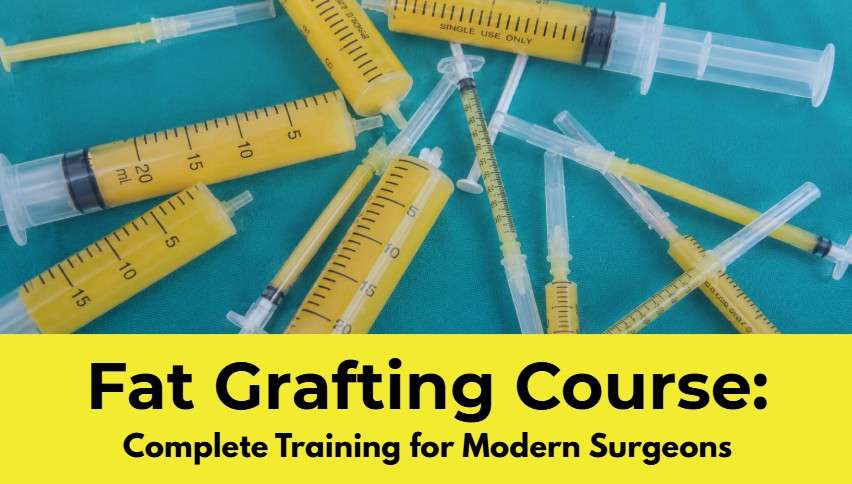
A Fat Grafting Course is a specialized surgical training program designed to teach surgeons how to safely harvest, process, and transfer autologous fat for aesthetic and reconstructive purposes.
Direct Answer
A Fat Grafting Course trains surgeons in fat harvesting, purification, injection techniques, facial volume restoration, contour enhancement, and patient safety protocols.
Core Learning Areas
Patient assessment
Donor site selection
Fat harvesting techniques
Fat processing methods
Injection strategies
Structural fat grafting
Complication management
Post-operative care
Who Should Join a Fat Grafting Course?
This training is particularly valuable for:
Otorhinolaryngologists (MS, DNB, DLO)
Facial rejuvenation procedures
Volume restoration techniques
Rhinoplasty adjunct procedures
Plastic Surgeons (MCh, DNB)
Facial contouring
Reconstructive applications
Body contour enhancement
Aesthetic Surgeons
Non-implant volume restoration
Facial harmonization
Why Fat Grafting Training Matters?
Modern fat grafting requires more than simply transferring fat from one area to another.
Successful outcomes depend on:
Surgical Precision
Small technical errors can significantly affect graft survival.
Improved Patient Outcomes
Proper training helps surgeons achieve:
Better volume retention
Natural-looking results
Reduced complications
Higher patient satisfaction
Enhanced Clinical Confidence
Surgeons who undergo structured training often demonstrate improved decision-making during complex cases.
Techniques Taught in an Advanced Fat Grafting Course.
1. Fat Harvesting Techniques
Participants learn:
Low-pressure aspiration methods
Cannula selection
Donor site optimization
Tissue preservation strategies
2. Fat Processing Methods
Training commonly includes:
MethodPurposeFiltrationRemoves impuritiesSedimentationImproves fat qualityCentrifugationConcentrates viable fat cellsWashing TechniquesEnhances graft purity
3. Fat Injection Training
Key concepts include:
Micro-droplet injection
Layered placement
Anatomical safety zones
Vascular risk avoidance
4. Facial Fat Grafting Course Components
Common treatment areas:
Temples
Midface
Cheeks
Nasolabial folds
Jawline
Chin
Periorbital region
5. Structural Fat Grafting Course Concepts
Structural fat grafting focuses on:
Deep tissue support
Long-term volume restoration
Facial architecture enhancement
Reconstructive correction
Latest Innovations in Facial Fat Grafting.
The field continues to evolve rapidly.
Nano fat Technology
Used for:
Skin quality improvement
Fine wrinkle correction
Regenerative applications
Micro fat Techniques
Ideal for:
Facial contour refinement
Delicate anatomical regions
Regenerative Fat Grafting
Combines volume restoration with tissue regeneration principles.
Ultrasound-Guided Fat Placement
Improves accuracy and safety in selected procedures.
Stem Cell-Enriched Fat Applications
Emerging research continues to explore enhanced regenerative outcomes.
What Should Surgeons Look for Before Enrolling?
Before selecting a course, evaluate:
Faculty Expertise
Look for internationally recognized surgeons with extensive clinical experience.
Evidence-Based Curriculum
The program should include:
Scientific literature
Anatomy review
Surgical planning
Complication management
In OT Assistance
Observe real surgical workflows and clinical decision-making within the operating theatre environment.
Comprehensive Coverage
The course should address:
Facial fat grafting
Structural fat grafting
Reconstructive applications
Patient safety
Continued Mentorship
Post-course support often accelerates skill development.
How In OT Assistance Enhances Clinical Practice?
Clinical observation and guided participation during operative procedures provide significant educational value.
Benefits include:
Understanding surgical workflow
Learning anatomical landmarks
Improving procedural confidence
Enhancing complication recognition
Observing patient-specific customization
This exposure helps translate theoretical knowledge into real-world surgical application.
Statistics and Industry Data
Recent global aesthetic surgery trends indicate continued growth in fat transfer procedures.
Industry Highlights
Fat grafting remains one of the most frequently performed volume restoration procedures globally.
Demand for natural, autologous treatments continues to rise.
Facial rejuvenation procedures are experiencing strong growth across multiple regions.
Patients increasingly prefer treatments utilizing their own tissues rather than synthetic fillers.
These trends highlight the importance of specialized fat grafting education for modern surgeons.
Expert Insights
“Successful fat grafting is not merely a transfer procedure. It is a combination of surgical technique, anatomical understanding, tissue biology, and aesthetic judgment.”
Conclusion
A modern Fat Grafting Course provides surgeons with the knowledge, technical skills, and clinical insights necessary to achieve predictable outcomes in aesthetic and reconstructive surgery.
As demand for natural rejuvenation and regenerative procedures continues to grow globally, advanced education in autologous fat transfer has become increasingly valuable. Surgeons who invest in structured training, evidence-based learning, and In OT Assistance are better positioned to deliver safe, effective, and patient-centered results.
Frequently Asked Questions
What is a Fat Grafting Course?
A Fat Grafting Course teaches surgeons how to harvest, process, and inject autologous fat safely and effectively.
Who should attend a Fat Grafting Course?
Otorhinolaryngologists, Plastic Surgeons, Facial Plastic Surgeons, Reconstructive Surgeons, and Aesthetic Surgeons.
What is autologous fat grafting?
Autologous fat grafting uses a patient’s own fat tissue to restore volume and improve contours.
Is Facial Fat Grafting difficult to learn?
The procedure requires advanced anatomical knowledge and technical precision. Structured training significantly improves competency.
Why is Structural Fat Grafting important?
Structural fat grafting restores deeper facial support and helps create long-lasting, natural results.
How does In OT Assistance improve learning?
It provides direct exposure to operative techniques, patient selection, procedural planning, and surgical workflow.
What are the latest innovations in fat grafting?
Nanofat, microfat, regenerative fat grafting, ultrasound-guided techniques, and stem cell-enhanced applications.
Can fat grafting be used for reconstruction?
Yes. Fat grafting is widely used in facial reconstruction, trauma correction, scar management, and contour restoration.
Recon Institute of Aesthetic Medicine & Surgery
Recon Institute of Aesthetic Medicine & Surgery publishes structured academic resources for surgeons in rhinoplasty and facial aesthetics.
Published May 27, 2026